Why Rivian CEO RJ Scaringe wants his EV company to be compared to Apple, not Tesla
Also: All the news and watercooler chat from Fortune.

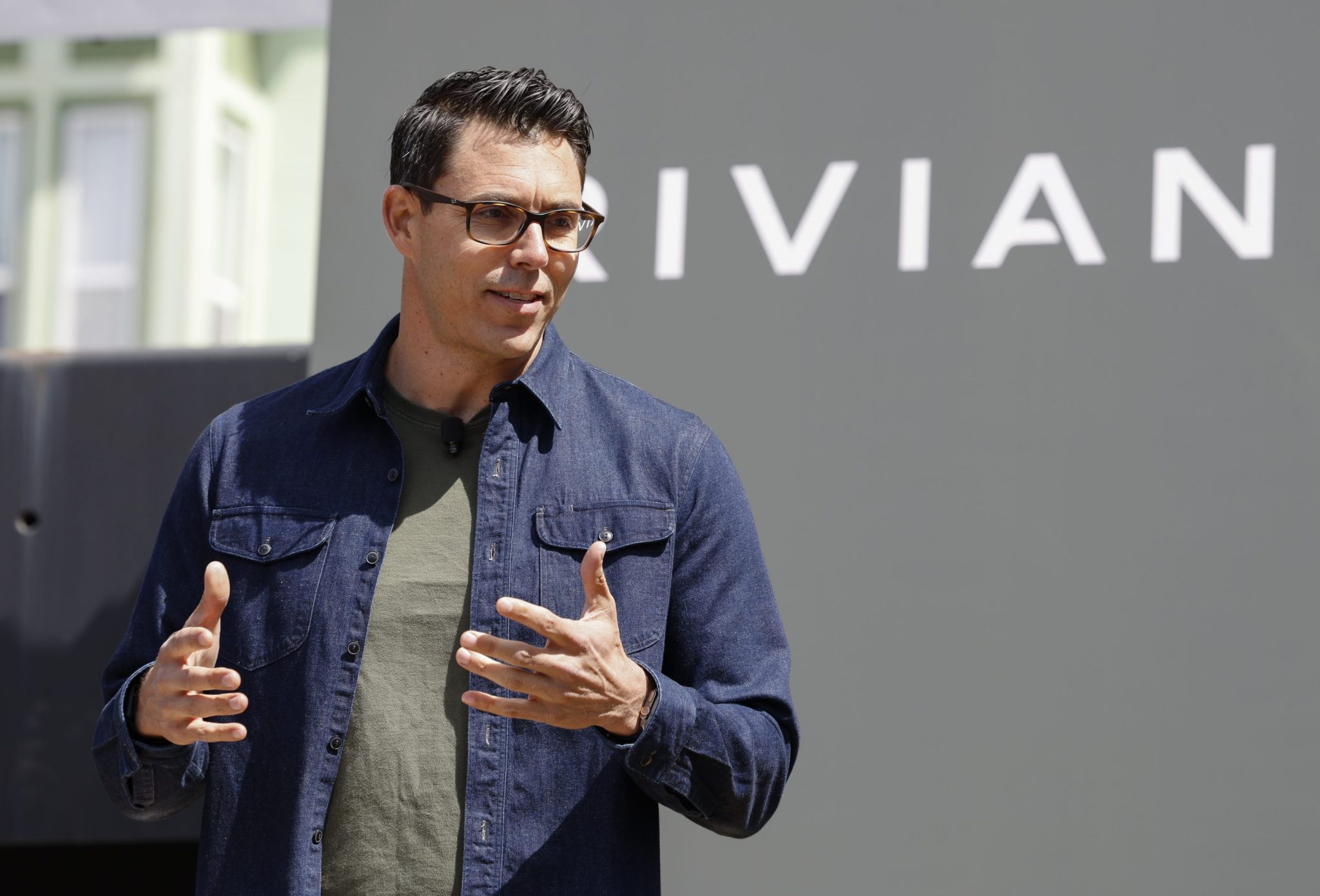
- In today’s CEO Daily: Diane Brady interviews Rivian CEO RJ Scaringe.
- The big leadership story: Ford rehired 350 veteran engineers after AI fell short.
- The markets: Mostly up after a U.S. rally on Monday.
- Plus: All the news and watercooler chat from Fortune.
Good morning. While sitting in the Rivian R2 electric SUV at the Aspen Ideas Festival this weekend, CEO RJ Scaringe opened a glove box and pointed to the felt lining. “That cost $11,” he said. Is that expensive or cheap? Perhaps sensing my neutrality, Scaringe pulled out his phone to show me a review by an auto writer who wants to buy an R2 when sales start next year and thinks it could be America’s next great SUV. “That’s the reaction we want,” he told me. “We had to get this right and we’re happy that people are loving it.”
I don’t know if R2 will be a hit, but it’s a testament to the resilience of Rivian’s founder. Scaringe launched the EV company in 2009, one day after getting a PhD from MIT in making combustion engines cleaner. (He studied them to kill them and thought a PhD would help attract investors.)
It took nine years to unveil his first products—a pickup truck and a large SUV. In 2021, Rivian had the biggest IPO of the year, raising almost $12 billion to start production. Investor Amazon has partnered on electric delivery vans, with 30,000 on U.S. roads and plans to have 100,000 in service by 2030. There’s also a $5.8 billion joint venture with Volkswagen to create software-designed vehicle architecture and a deal with Uber to build 50,000 robotaxis. And Rivian is on Fortune’s 2026 ranking of America’s Most Innovative Companies.
Still, it’s been a rough 17-year ride, with a scrapped sports coupe, supply shortages, software bugs, price hikes and optimistic promises that led to Rivian paying $250 million to settle a shareholder lawsuit. R2 is the third try at getting this vehicle right. With losses shrinking but still in the billions, the stock is 88% below its debut price of $130. “For any entrepreneur who’s building a complex business, you have to be comfortable being misunderstood for a while,” Scaringe told me. “Patience and having a good signal-to-noise filter is important. If I got dropped into my role now without those previous experiences, the noise would be so overwhelming. I’ve had people say this is a horrible idea, you’re wasting your brain. Part of the founder’s journey is rejection and building resilience to being misunderstood.”
This is a man who delivered his first two trucks while they were still prototypes to actors Ewan McGregor and Charley Boorman when they wanted to take an all-electric journey from Patagonia to LA for their 2019 TV series, Long Way Up. “Nobody was ready for that trip,” he said of the ambitious 13,000-mile journey. “But that’s kind of what it is. You just keep going.” Scaringe doesn’t fret about China, saying his technology is as good as its top five EV makers though he can’t compete on the cost of labor. And he doesn’t think much about “very vocal” Elon Musk, saying, “we probably couldn’t be more different in terms of the way we show up to the world.”
The same could be said of their companies as Tesla has about 17 times the revenue of Rivian and 75 times the market cap, not to mention almost 10 times the cash and healthy profits. But Scaringe is playing the long game. He hopes Rivian will one day be compared not to Tesla but to Nike or Apple. “I hope the brand means more than the products,” he said. “I hope the product inspires people to do the things they love.”
Contact CEO Daily via Diane Brady at diane.brady@fortune.com
This story was originally featured on Fortune.com
Share
What's Your Reaction?
 Like
0
Like
0
 Dislike
0
Dislike
0
 Love
0
Love
0
 Funny
0
Funny
0
 Angry
0
Angry
0
 Sad
0
Sad
0
 Wow
0
Wow
0