United Airlines’ growth strategy is all about selling customers a better version of what they already buy
Also: All the news and watercooler chat from Fortune.

- In today’s CEO Daily: United is transforming air travel into a quasi-luxury experience.
- The big leadership story: Hugging Face turns to Chinese AI to fight a cyberattack.
- The markets: Mostly up as investors weigh a new diplomatic push to pause the Iran conflict.
- Plus: All the news and watercooler chat from Fortune.
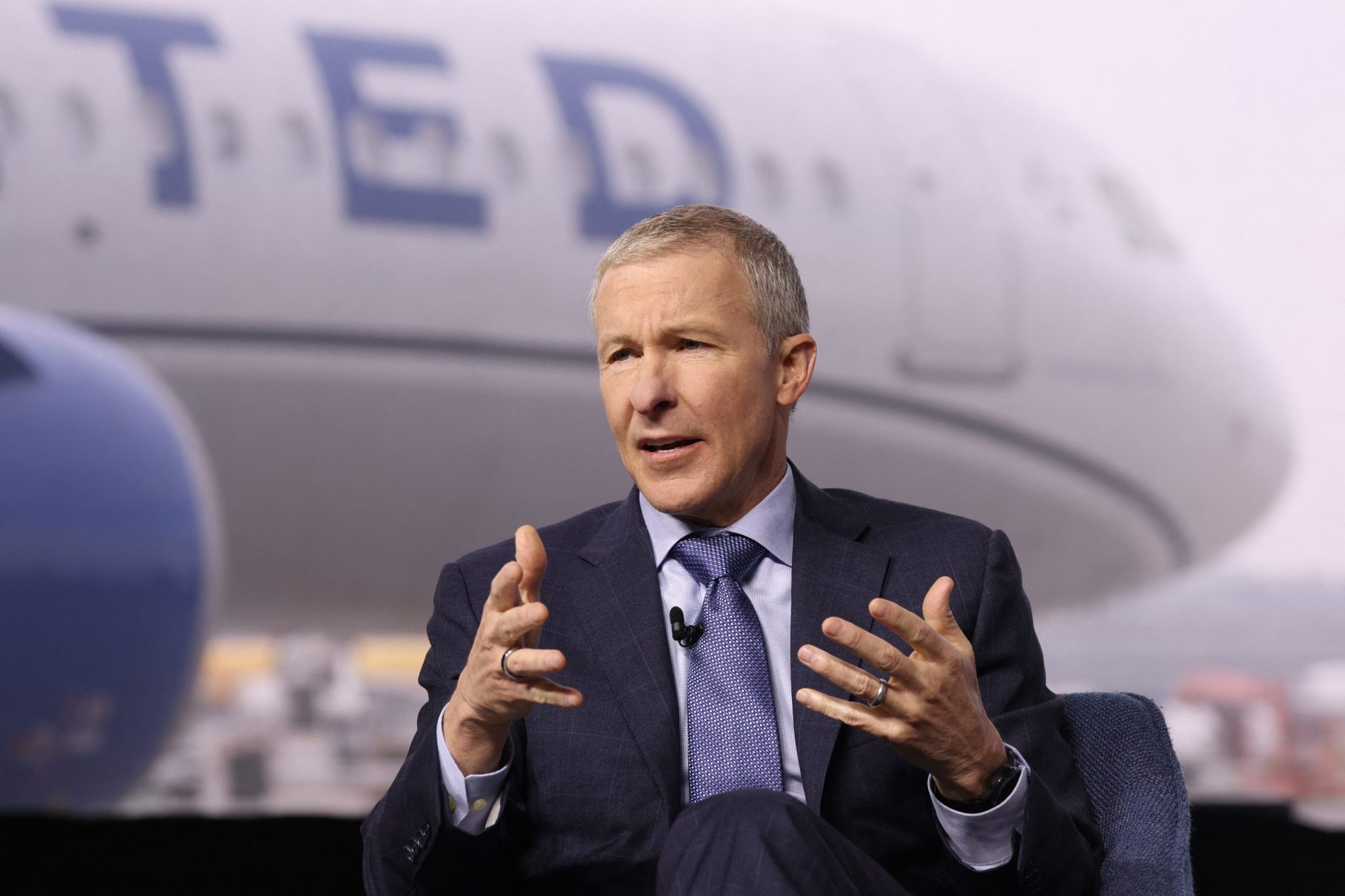
Good morning. Phil Wahba writing from New York this morning. If it seems like airfares keep climbing—but you keep paying anyway—that’s all part of the plan, at least at United Airlines. There, CEO Scott Kirby has been working on a long-term “premiumization” of the airline’s offerings, and his playbook is relevant to any CEO looking to squeeze more margin out of the same customer base by selling them a better version of what they already buy.
“Demand is strong,” Kirby told Wall Street analysts on a conference call last Thursday. “United has proven that our brand loyalty strategy is working, and we’re using today’s environment to accelerate our investments in all aspects of the customer experience from nose to tail.”
Industry-wide, prices for domestic routes are up 35% this year, and international fares are up 15%. But this isn’t just a reaction to higher fuel prices—it’s a strategy that has been years in the making.
As I wrote for Fortune recently, major carriers, most notably and successfully United and Delta Air Lines, have spent years persuading customers to pay more for tickets by investing in much improved services. The two airlines have built their businesses around higher-spending travelers, international networks, and lucrative loyalty programs.
The goal is to have passengers see air travel not as a commodity so much as a quasi-luxury experience. That has meant adding premium seats, offering access to snazzier lounges, free upgrades, and baggage fee waivers. (Major U.S. airlines have also reduced capacity and cut flights, helping their pricing power.) Revenue from United’s high-end seats was up 16% in the most recent quarter versus a year ago, compared to basic economy revenue growth of 11%. A similar narrative is playing out at Delta, where premium revenue grew 17%, outpacing overall growth.
And the two airlines are engaged in an arms race to convince travelers they offer the most deluxe flying experience. Delta, for instance, is testing planes in which the majority of seats are premium, while United touted plans to offer Wi-Fi supported by Elon Musk’s Starlink on 1,000 of its planes by year-end. (Delta has opted to go with Amazon’s satellite service, telling Fortune that its mix of entertainment and shopping options made it the more attractive partner.)
And the tinkering with offerings continues. In March, United said it was swapping more economy seats for premium seats in some planes. Last week, it announced it would roll out a new row in its “economy plus” area in which the middle seat is always empty, replaced by a shared table for the aisle- and window-seat travelers. It is reminiscent of British Airways’ short-haul business-class layout, which blocks out the middle seat, and is another example of airlines establishing more distinctions between cabins.
Investors clearly like the news—United’s stock has been on an upwards march from around $47 at this time two years ago to $119 at the close yesterday. The lesson for other CEOs eyeing their own margins: commodity businesses have more pricing power than they think, if they can convince customers to buy the upgrade instead of the seat.
Contact CEO Daily via Diane Brady at diane.brady@fortune.com
This story was originally featured on Fortune.com
Share
What's Your Reaction?
 Like
0
Like
0
 Dislike
0
Dislike
0
 Love
0
Love
0
 Funny
0
Funny
0
 Angry
0
Angry
0
 Sad
0
Sad
0
 Wow
0
Wow
0