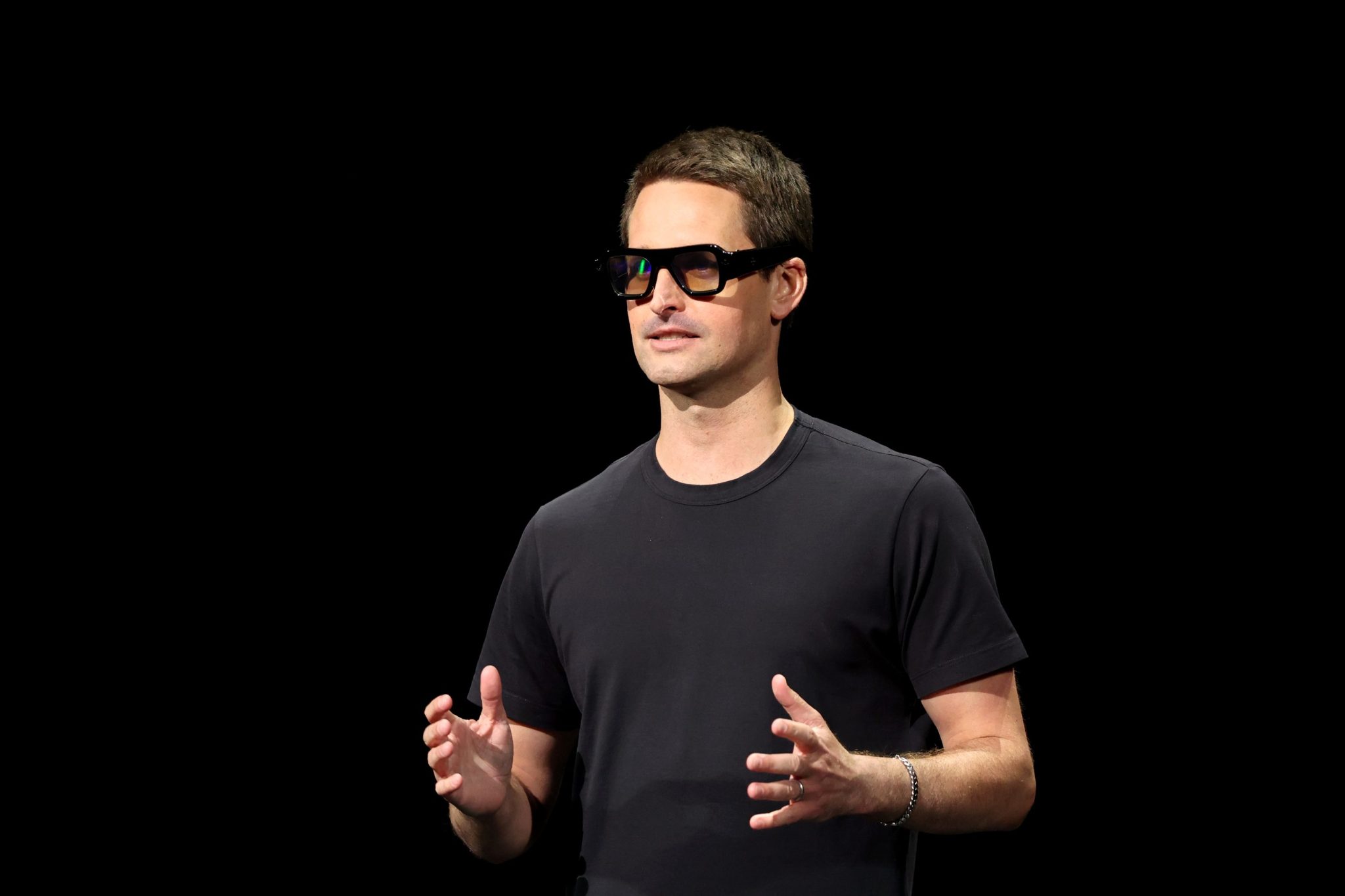
This is a ‘come to Jesus moment’: Ford CEO says American carmakers are battling a perfect storm
If Ford "doesn't put its chips on the right number," it may not survive, said Farley.


Ford CEO Jim Farley, the leader of the 122-year-old company that democratized the car for everyday Americans, said carmakers are facing three “perfect-storm moments” that could prove existential.
Farley took over as CEO in 2020, but has worked at the automaker since 2007. Before that, he spent nearly 20 years at Toyota.
Now, he thinks the three-fold transformation barreling at carmakers represents a “come to Jesus” moment for the industry, and they will have to either meet each of the challenges or face the consequences, he told Rolling Stone.
China
The first threat is Chinese carmakers. As recently as 2022, Western companies dominated the car market in the world’s second largest economy, said Farley. But in 2023, Chinese automakers surpassed Western rivals’ China car sales for the first time, the Wall Street Journal reported.
Volkswagen was the market’s biggest player for a decade. The German automaker sold a high of 4.23 million units in 2019, but the market’s growing preference for EVs and homegrown options led to steady declines that cut VW’s sales down about 36% to 2.69 million in 2025.
Ford has also seen its own declines in China, where sales fell to 288,000 in 2022 from a peak of 853,000 in 2016.
Farley knows firsthand the capability of the Chinese car industry. In 2024, he spent six months driving a Xiaomi SU7, the first EV created by the Chinese tech company better known for its smart phones, and didn’t want to give it up.
China’s carmakers have excelled partly because of controversial state subsidies, he said, but also because of engineering excellence.
“They have the most subsidies from the government, plus their OEMs [original equipment manufacturers] are really good,” he told Rolling Stone.
After success domestically, some of China’s biggest carmakers are expanding worldwide, with BYD surpassing Ford in global sales last year—while selling only EVs and hybrids.
Design
Second, car companies are also facing the challenge of greater complexity thanks in part to the rise of EVs and a shift in engineering toward “software-defined vehicles,” according to Farley.
“The systems for safety, driver assistance, and controlling the vehicle, are so sophisticated and there’s so much software in the vehicles that are sensing devices,” he said.
These vehicles are much more complicated and expensive to build than traditional vehicles, and they require a different set of expertise than that which automakers have traditionally employed to build their vehicles.
An example of this struggle is Ford’s F-150 Lightning, an electric pickup truck that Ford discontinued in December after only three years in production. Part of the problem with the vehicle was that the company approached it in a traditional way, instead of resetting their approach adjusted to building an EV.
“It didn’t take us long to learn that our internal combustion engine prejudice was so high that we actually hadn’t designed the cars right,” he told Rolling Stone.
Meanwhile, when comparing the all-electric Mustang Mach E to the Tesla Model Y, the Mustang was 70 pounds heavier because Ford had approached the internal wiring in a more traditional way.
Elon Musk’s carmaker thought about designing its vehicle differently, he added.
“They said, ‘Let’s design the vehicle for the lowest, smallest battery.’ Totally different approach,” he said.
Regulations
The third and potentially largest storm, Farley said, is the regulatory whiplash that has accompanied the march toward lower carbon emissions.
“Everyone thought the first inning or the second and third inning would be pure electric vehicles,” Farley said.
Instead, expensive batteries and the Trump administration’s weakening of emissions standards have changed the calculus. In December 2025, Trump reduced the mandatory annual improvement for automakers’ emissions from the Biden administration’s 2% per year to a rate of 0.5% that steadily drops to 0.25% in 2031.
The National Highway Safety Administration predicted the move will bring down the average miles per gallon for light-duty vehicles to 34.5 miles per gallon by 2031 from the 50.4 miles per gallon average that would’ve been reached under the Biden-era standards.
“What that really means is, if there are no regulations, then every OEM is going to go back to their cultural norm,” Farley said.
Yet, Ford is hedging its bets. If emissions standards can change under Trump, it’s likely they will change under the next president.
So Ford moved away from its plug-in EV business and scrapped its F-150 Lightning in December. The company is betting its future on hybrids, extended-range EVs (EREVs), and a smaller, affordable EV platform.
“If we don’t put our chips on the right number and the right color, Ford could maybe not exist,” he said.
This story was originally featured on Fortune.com
Share
What's Your Reaction?
 Like
0
Like
0
 Dislike
0
Dislike
0
 Love
0
Love
0
 Funny
0
Funny
0
 Angry
0
Angry
0
 Sad
0
Sad
0
 Wow
0
Wow
0