
Amazon shares sink as spending on AI overshadows growth in cloud unit
E-commerce giant is among the biggest spenders on AI infrastructure.

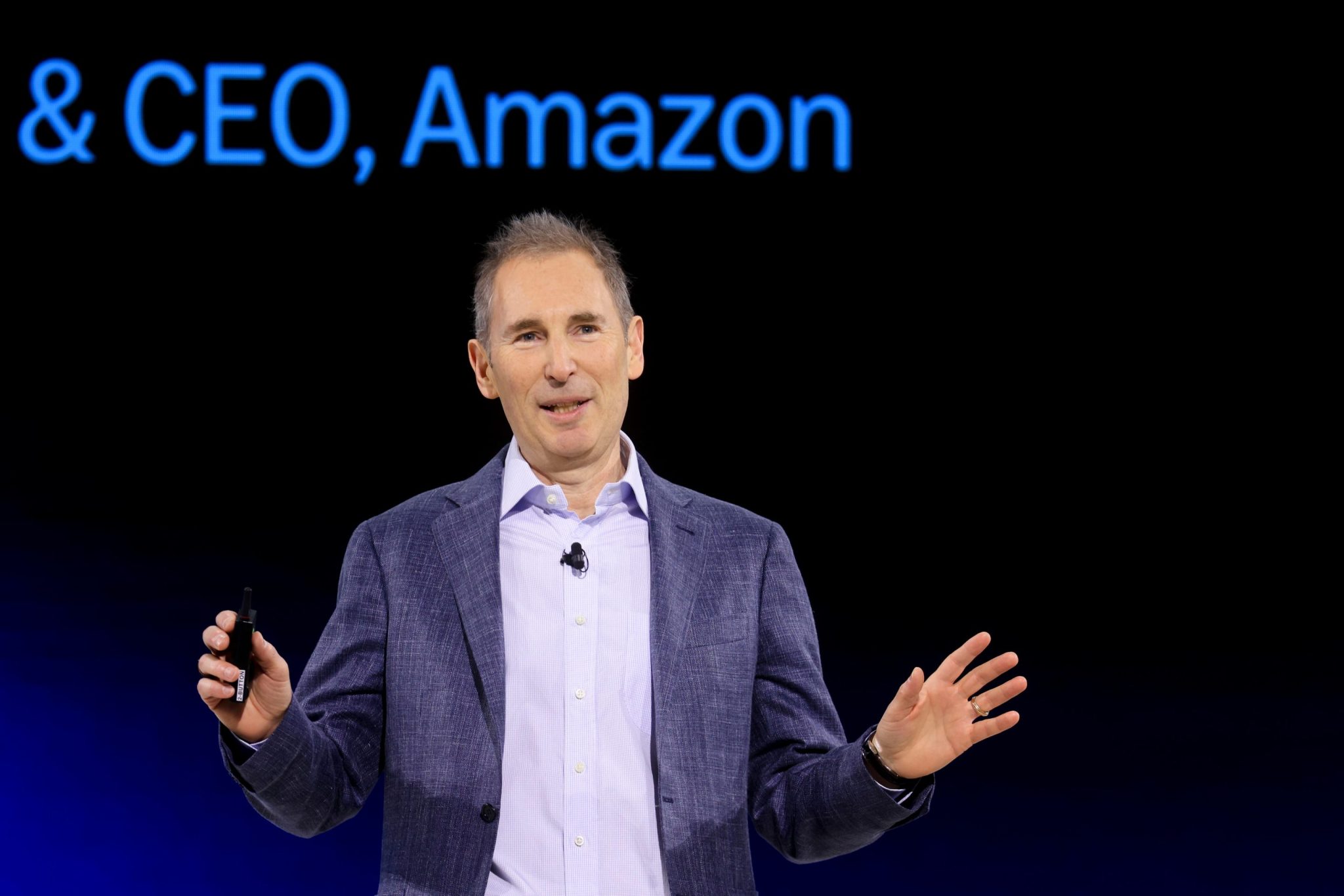
Amazon’s cloud computing unit is growing steadily, keeping pace with AI demand, but the e-commerce giant’s massive spending on AI data centers and weaker advertising performance are worrying investors.
Amazon on Thursday reported third-quarter revenue of $201.9 billion, slightly missing expectations. Its profit was $20.7 billion, which also fell short of expectations and was down from the same period a year ago. Amazon said the decline was due to gains it recorded a year earlier from its investment in AI company Anthropic.
Amazon Web Services, the cloud unit, saw third-quarter sales rise 39.3% to $45.98 billion, topping Wall Street targets and marking its fastest growth in years.
The results showed that demand for Amazon’s cloud services, particularly those tied to AI, remains high. But the Seattle-based company is also continuing to spend at unprecedented rates to keep up, and performance in its non-cloud businesses is weakening. On Thursday, Amazon said its quarterly capital expenditures totaled $75.9 billion and reiterated that it expects its 2026 capital spending to be about $220 billion.
“This is a once-in-a-lifetime opportunity,” Amazon Chief Executive Andy Jassy said in a call with analysts, defending the company’s capital spending. “What we’re seeing with AI, it’s the biggest transformation in our lifetime. We’re going to invest to continue being the leader.”
Jassy said AWS should grow into a $1 trillion business in the next five to 10 years and that Amazon expects revenue growth in its cloud business to be 40% or more in 2027 and 2028. The forecast is unusually long-range for the company, but it signals confidence in future growth.
The company’s advertising business grew 12% year over year in the third quarter, missing analyst expectations, and its projected holiday-quarter revenue and operating profit are below Wall Street estimates at the midpoint of the range. The heavy AI infrastructure spending also pushed its free cash flow deeply negative; the company said free cash flow swung from positive $14.8 billion to negative $42.4 billion over the past year.
Amazon intends to begin selling its Trainium chips externally in late 2027. Jassy also predicted that 20% of all AI tokens consumed by enterprises over the next one to two years could be dedicated solely to security.
Shares of the company sank more than 6% in after-hours trading.
Amazon’s earnings came on the heels of those from peers such as Microsoft and Google parent Alphabet, which also reported robust growth in their cloud units and soaring AI infrastructure costs. Alphabet also reported weaker-than-expected advertising growth. The results have shown that the need for AI compute remains as high as ever, and so does the spending. Investors in Amazon and other tech giants are closely watching the tightrope that so-called hyperscalers are walking, and any sign of a slowdown scares those worried about a bubble popping.
Amazon is one of the biggest spenders in building out data centers. The company, famous for opening hundreds of e-commerce warehouses around the U.S., has lately been putting its capital into AI hubs. Collectively, Amazon, Microsoft, Alphabet, and Meta Platforms are expected to spend more than $700 billion on capital expenditures in 2026, mostly on data centers.
For the current quarter, Amazon said it expects sales between $240 billion and $247 billion and operating income between $28.5 billion and $33.5 billion. The midpoints of both ranges are lower than what analysts predicted. Chief Financial Officer Brian Olsavsky said fuel and other transportation costs are expected to be higher in the fourth quarter than in the third.
This year, Amazon held its annual Prime Day in the second quarter rather than the third, which affected third-quarter results.
AI company Anthropic’s prospectus for its upcoming initial public offering, made public earlier this week, showed just how heavily the lab relies on Amazon and other major cloud companies for AI compute. Anthropic has committed to spending at least $110 billion on Amazon cloud services from this past May through April 2036, regardless of actual usage. That is part of Anthropic’s commitment of at least $389.9 billion in compute spending with companies including Microsoft, Alphabet, and SpaceXAI.
According to Anthropic’s IPO filing, Amazon has invested about $18 billion in Anthropic and committed to invest up to another $15 billion.
Because Amazon pioneered cloud computing, it’s growing off a larger customer base, so its growth rates can be lower than those of its peers. However, the AI boom has increased pressure on Amazon to show that its cloud unit is seeing as much demand as others, especially because Amazon’s spending is so high.
Amazon has now entered its crucial holiday quarter, which generates most of its yearly revenue. The company recently said it plans to hire 300,000 workers for the holidays, a move it often makes to staff up as e-commerce demand peaks. Over the past three months, it has made a big hardware push, introducing Alexa tablets, the Bee AI wearable, and updated Echo products.
Even as it hires for its warehouses, Amazon is cutting jobs elsewhere. This week it cut 250 jobs in its devices and services division, after earlier shedding about 1,000 people in its retail department. It laid off about 30,000 workers between late 2025 and early this year.
The company is also evolving its AI strategy. In September, it blocked Meta’s popular new AI assistant, Muse, from accessing its online store. Muse is a threat to Amazon because it bypasses the usual process of humans visiting its website or app and seeing the advertisements that serve as a key profit driver. Jassy said Thursday that few customers are shopping through external agents because “the experience is still not great.”
This week, Amazon told its software engineers in an internal memo, which it also published in a blog, that they should embrace AI but will ultimately be judged on outcomes, not on how many tokens they consume or how much code they generate.
“If your work does not benefit from current AI tooling, that is a finding, not a failing,” the company said. “Document why, share it with your community of peers, bring it to your manager, and work to find solutions. An engineer who can explain where AI does not yet help their work is demonstrating the judgement we are asking for.”
This story was originally featured on Fortune.com
Share
What's Your Reaction?
 Like
0
 Dislike
0
 Love
0
 Funny
0
 Angry
0
 Sad
0
 Wow
0